How to Build an Operating System When Your Product Line Starts Growing
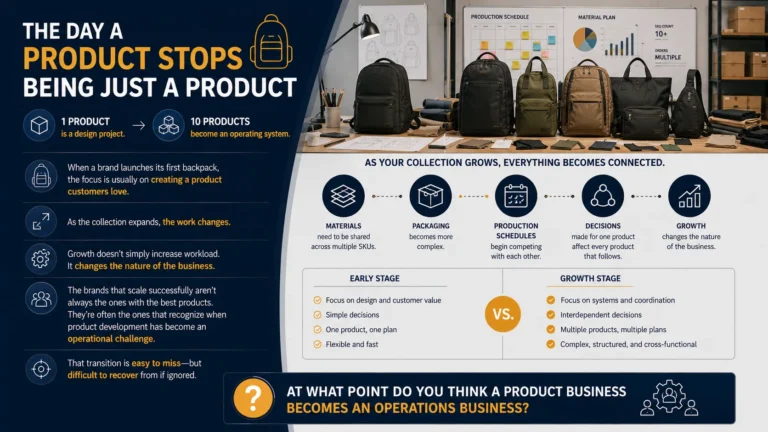
Launching one product is mainly a product development challenge.
Building a collection of products becomes an operational challenge.
This is a transition many growing bag brands underestimate.
At the beginning, the main goal is simple:
Create a product customers want.
But as the product line expands, the business requirements change.
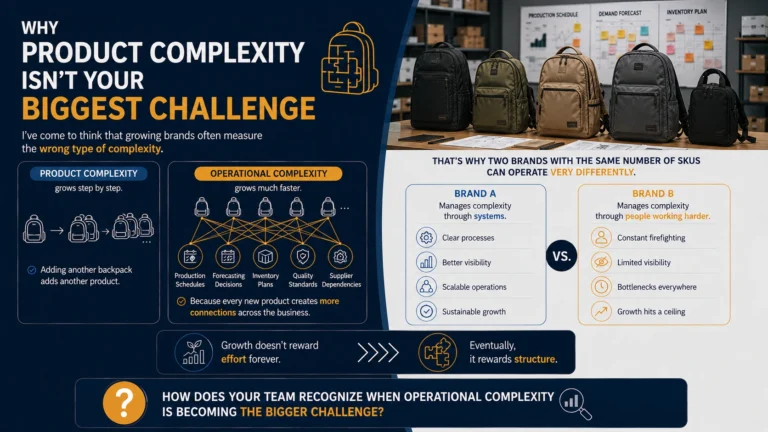
More products create more connections between different parts of the operation.
1. Create Structure Before Adding More Products
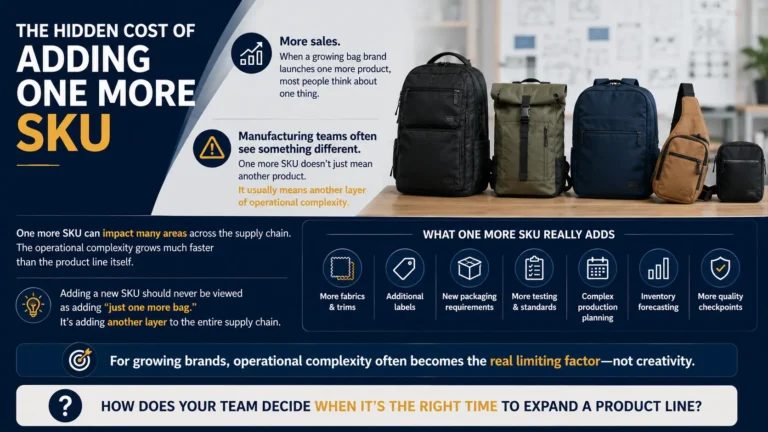
When a brand manages multiple products, every decision can affect the entire product line.
A new product may impact:
- Material sourcing.
- Supplier coordination.
- Production planning.
- Packaging requirements.
- Inventory management.
Without clear systems, small decisions can create larger operational problems.
2. Build Shared Product Standards
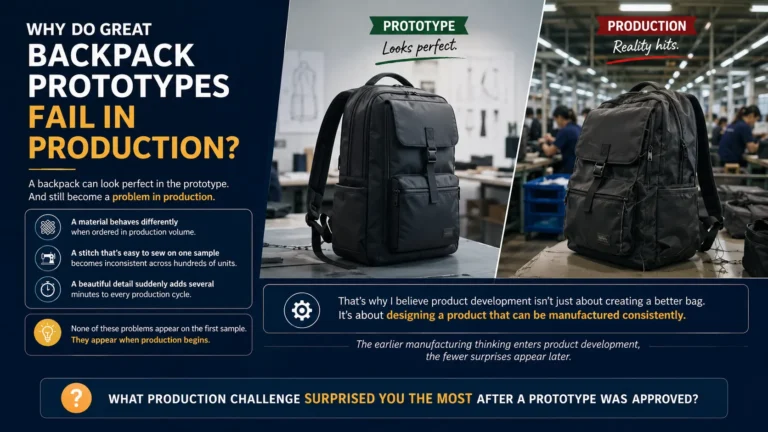
Growing brands need consistency across products.
This includes:
- Material specifications.
- Quality standards.
- Packaging guidelines.
- Production requirements.
- Documentation processes.
Shared standards make it easier to manage multiple SKUs and maintain product quality.
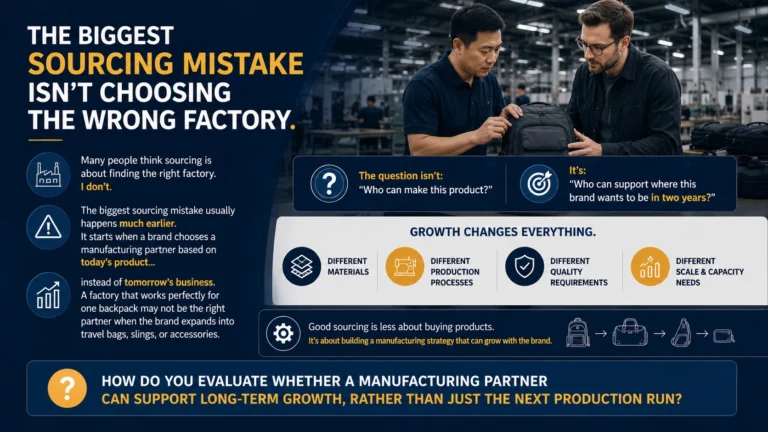
3. Improve Coordination Across the Supply Chain
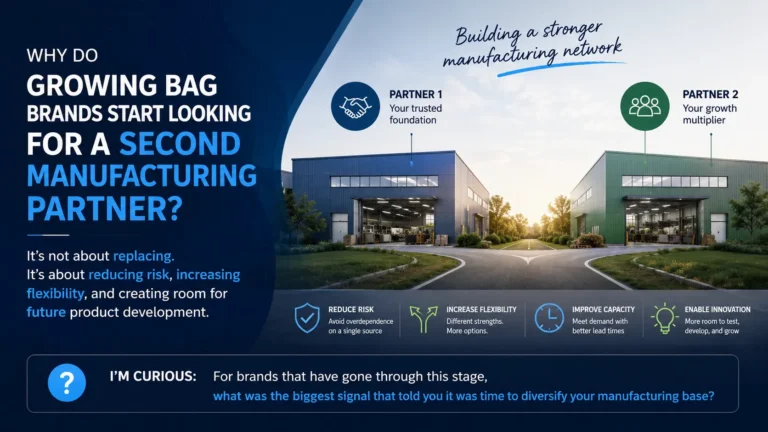
As collections grow, production becomes more connected.
Different products may compete for:
- Factory capacity.
- Material availability.
- Development resources.
- Quality control attention.
Better planning helps brands avoid delays and unnecessary complexity.
4. Recognize When Product Development Becomes Operations Management
A growing product business is no longer only about creating new designs.
It becomes about managing a system that connects products, suppliers, materials, and processes.
Successful brands understand this transition early.
They build operational systems that allow creativity to continue without creating unnecessary complexity.