How to Manage Operational Complexity as Your Product Line Grows
Operational complexity management becomes essential when a growing product line creates more connections across the business.
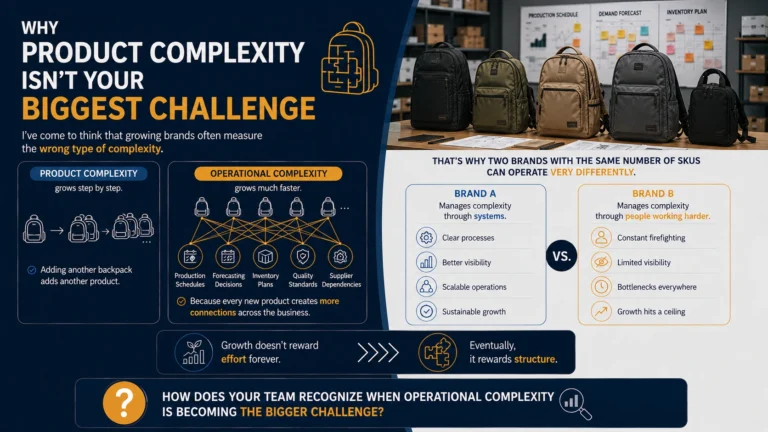
Many growing brands focus on product complexity.
They count the number of SKUs.
They track how many products they have launched.
They measure how fast the collection is expanding.
But the bigger challenge is often not the number of products.
It is the operational complexity created behind those products.
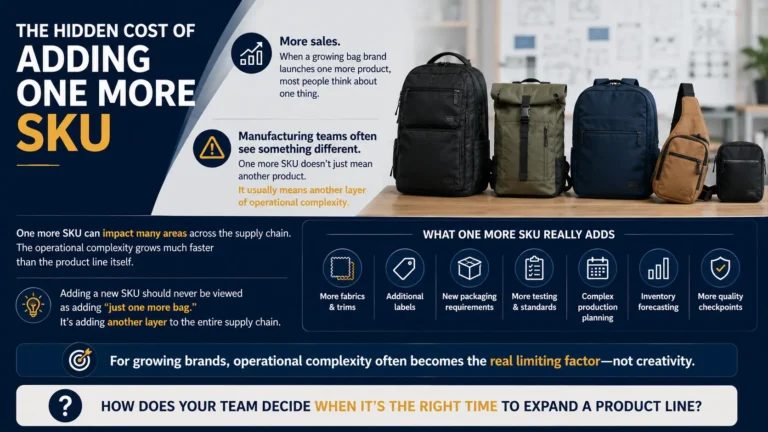
Adding one more backpack does not only mean adding one more design.
It can also mean:
- A new production schedule.
- A new forecasting decision.
- A new inventory plan.
- A new quality standard.
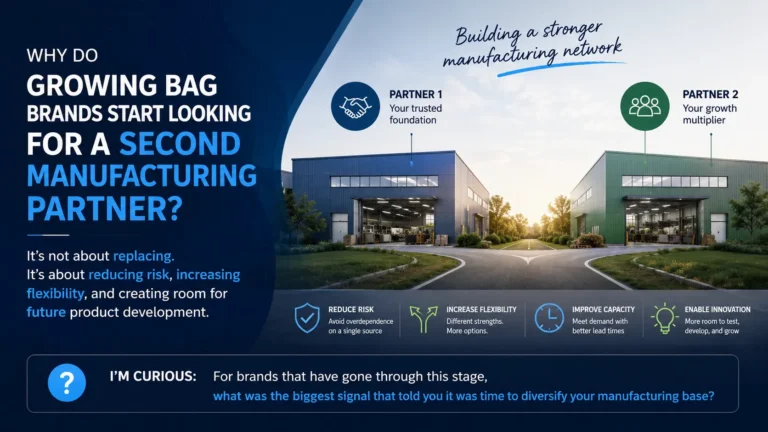
- A new supplier dependency.
As product lines grow, these connections can increase faster than the number of products themselves.
1. Use Operational Complexity Management to See the Full Impact
Product complexity is about the products themselves.
Operational complexity is about how those products interact with the business.
A new SKU may affect:
- Material sourcing.
- Production capacity.
- Supplier communication.
- Quality control.
- Inventory management.
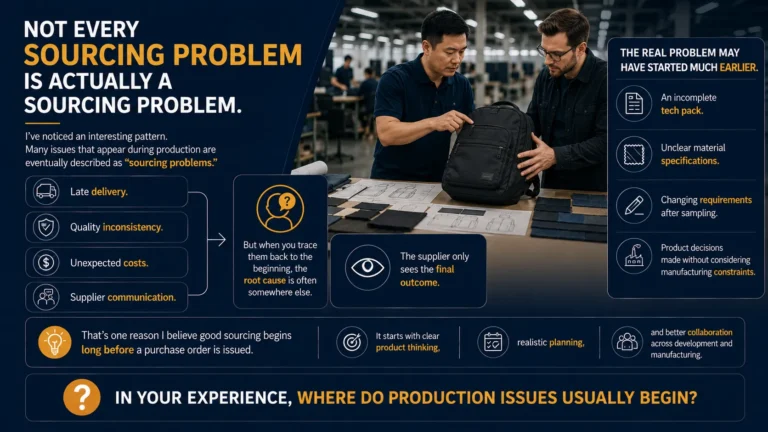
Understanding this difference helps brands identify the real challenges behind growth.
It also helps teams evaluate a new product by its total operating impact, not only by its sales potential or design value.
2. Build Systems Before Complexity Becomes a Problem
Many small brands manage growth through individual effort.
Teams communicate more.
People solve problems faster.
Employees handle more responsibilities.
This approach can work in the early stage.
But as the business grows, relying only on people becomes difficult to maintain.
Strong systems help manage:
- Product information.
- Production planning.
- Supplier coordination.
- Quality requirements.
- Decision-making processes.
These systems do not need to be complicated.
They need clear information, defined ownership, consistent standards, and repeatable decisions.
3. Create Structure That Supports Growth
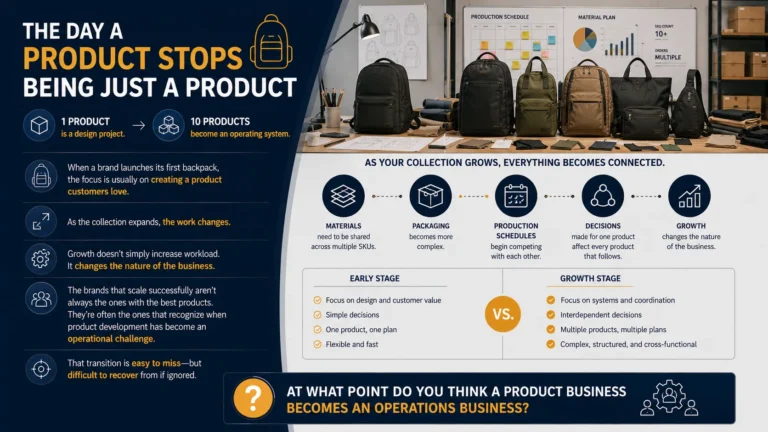
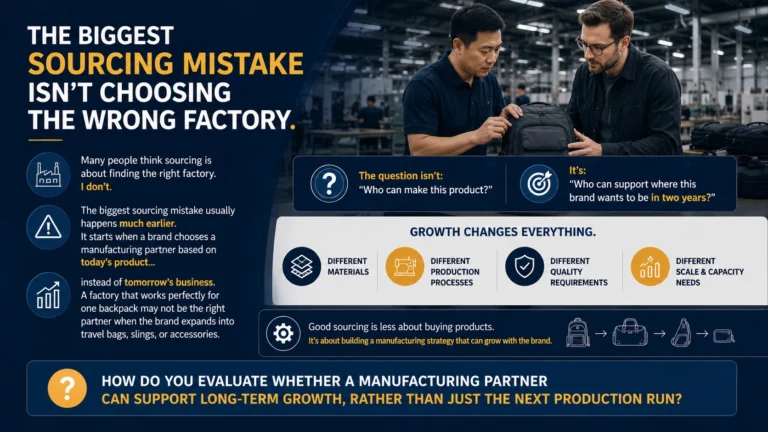
Growth does not only require more products.
It requires better coordination.
Brands that scale successfully are not always the ones with the largest product collections.
They are often the ones that build systems capable of managing increasing complexity.
The goal is not to avoid product expansion.
It is to make sure the business structure grows together with the product line.
Before adding another product, brands should ask which schedules, materials, suppliers, quality controls, forecasts, and inventory decisions will also need to change.