meridsource White Logo

How to Choose a Manufacturing Partner That Can Grow With Your Brand

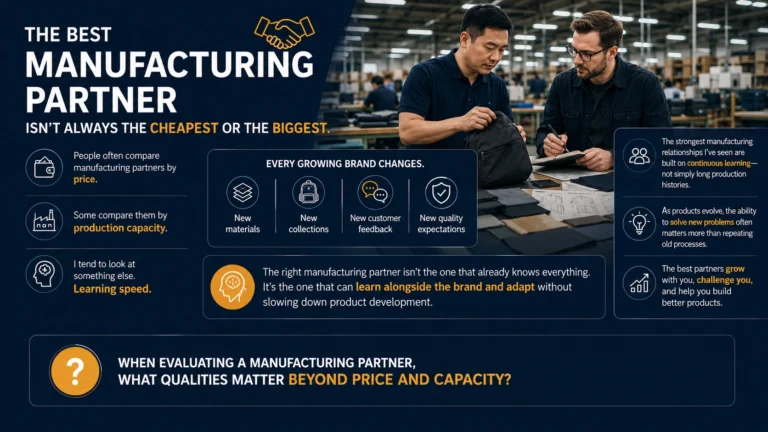
Choosing a manufacturing partner is not only about finding the lowest price or the largest production capacity.

These factors matter.

But for growing brands, long-term success often depends on another capability:

The ability to learn and adapt.

A brand rarely stays the same after its first product launch.

Over time, requirements change:

  • New materials are introduced.
  • Product collections expand.
  • Customer expectations evolve.
  • Quality standards become higher.

A manufacturing partner that can adapt to these changes can become a valuable part of the brand's growth.

1. Evaluate the Partner's Problem-Solving Ability

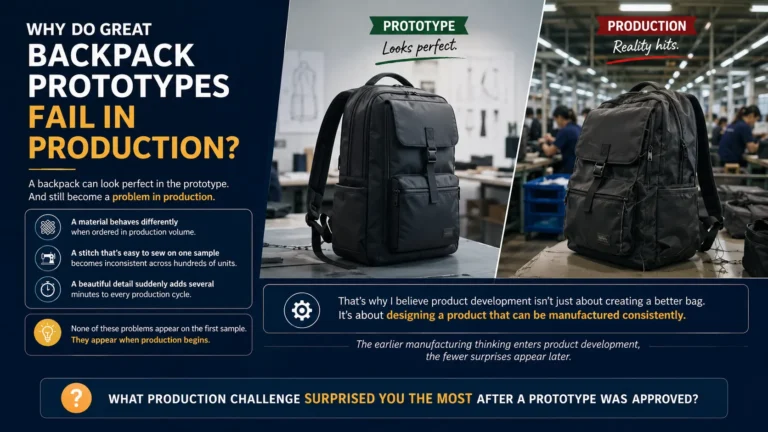
A strong manufacturing partner is not defined only by what they can produce today.

They should be able to identify problems and develop solutions when new challenges appear.

Consider whether the partner can support:

  • Material adjustments.
  • Production improvements.
  • Quality issue analysis.
  • New product development.

The ability to solve unfamiliar problems is often more important than simply repeating familiar processes.

2. Look for Continuous Learning During Collaboration

Manufacturing is a process of constant improvement.

The best partnerships are built when both sides share information and improve together.

A responsive manufacturing partner should:

  • Understand new requirements quickly.
  • Provide practical feedback.
  • Adjust processes when needed.
  • Improve efficiency over time.

Learning speed directly affects product development speed.

3. Consider Adaptability Beyond Current Capabilities

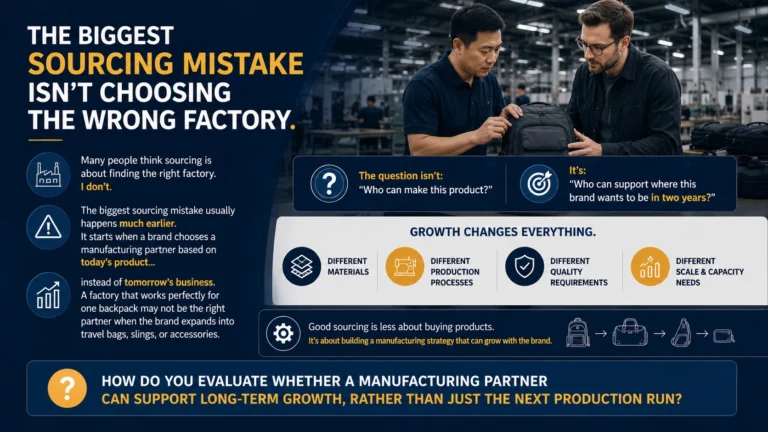
A factory may be excellent at producing one specific product.

But future growth may require:

  • Different product categories.
  • New construction methods.
  • More complex quality standards.

The right partner should have the flexibility to grow with the brand instead of limiting future possibilities.

4. Build a Partnership Based on Long-Term Development

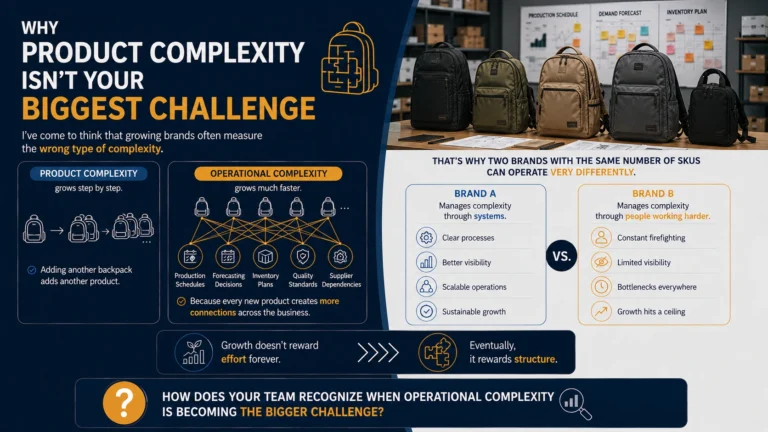
A manufacturing relationship is not only a transaction between buyer and supplier.

It is a collaboration built through communication, problem-solving, and continuous improvement.
The best manufacturing partner is not always the biggest factory or the lowest-cost option.

It is the partner that can understand change, adapt quickly, and support the brand through different stages of growth.

Latest knowledge

FAQs

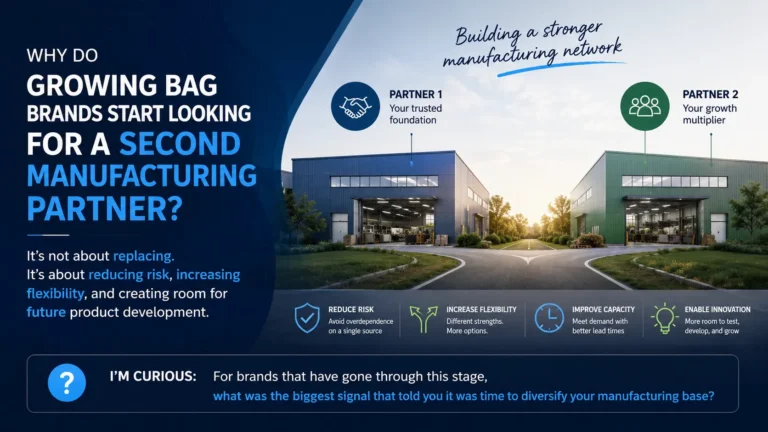
A brand should evaluate a second manufacturer when it can identify a specific capacity, capability, concentration, lead-time, or geographic constraint. The decision should be supported by a clear product allocation model and controlled requirements. A general desire for “more options” is not enough. First confirm that the real problem is not late planning, changing specifications, weak forecasting, or unclear internal ownership.

No. Dual sourcing can reduce dependence on one production route, but it also creates more coordination, qualification, documentation, material, and quality-control work. Two factories may still depend on the same upstream supplier. Risk falls only when the second route is genuinely qualified, addresses the relevant dependency, and can be managed without creating larger execution problems.

Sometimes, but only when the business exposure justifies planned dual sourcing. Both factories need controlled specifications, approved materials, patterns, tooling rules, quality criteria, and comparable production evidence. For many brands, a capability split is simpler: each factory owns a different product family. The correct model depends on the risk, volume, and management capacity.

Start with a controlled pilot SKU that tests the capability the brand actually needs. Review similar-product evidence, technical communication, material control, sampling, pre-production preparation, inline quality, final inspection, packaging, and delivery. Then place a limited pilot order. Do not qualify a production partner from a showroom, quotation, audit, or single sample alone.

Use one controlled product standard. It should include the tech pack, BOM, approved material and color references, construction details, tolerances, tests, packaging, approved sample, and inspection criteria. Use the same change-control and corrective-action process for both factories. Even with these controls, compare real production output because different equipment, materials, and workmanship can still create variation.

The reaction often depends on how the change is managed. Explain the business reason, protect confidential information, and keep allocation criteria stable. Do not frame a strategic network decision as punishment when the supplier has performed well. If the current factory continues to receive meaningful, well-planned business, the relationship can remain strong while the brand adds another capability or continuity route.

Often, it is not. Dividing limited volume can reduce leverage and attention at both factories. A qualified backup for one selected product may be more practical than two active sources for every SKU. Before adding a factory, compare the value of diversification with the extra development, MOQ, material, quality, travel, and management cost.