How to Identify the Real Cause Behind Sourcing Problems
When production issues happen, many brands immediately assume there is a sourcing problem.
- A delayed shipment.
- Inconsistent quality.
- Unexpected costs.
- Communication challenges with suppliers.
These problems are often connected to suppliers, but the real cause may start much earlier in the product development process.
Understanding the root cause is the first step to improving sourcing performance.
1. Review Product Information Before Blaming Suppliers
Many production problems begin with unclear product requirements.
Examples include:
- Incomplete tech packs.
- Missing material specifications.
- Unclear construction details.
- Different expectations between teams.
When suppliers do not receive complete information, production decisions become based on assumptions.
Clear product documentation helps reduce misunderstandings before manufacturing begins.
2. Define Requirements Before Production Starts
Changing requirements during development can create unnecessary complexity.
Late changes may affect:
- Material purchasing.
- Production schedules.
- Manufacturing processes.
- Quality standards.
- Final costs.
A strong sourcing process requires brands to define key decisions early and communicate them clearly.
3. Consider Manufacturing During Product Development
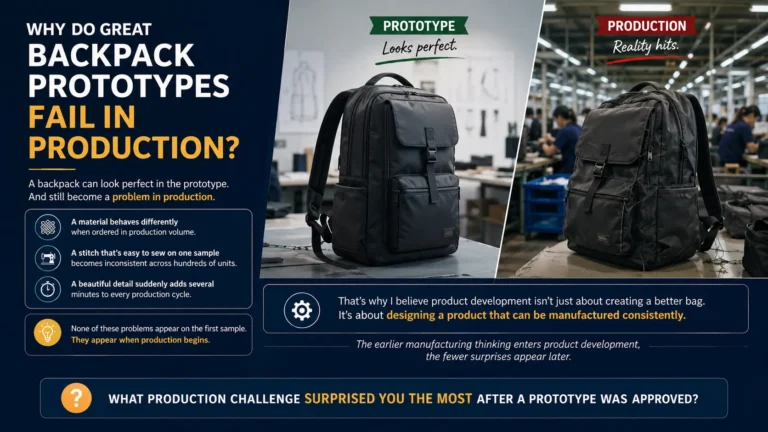
A product idea needs to work in real production conditions.
Some designs may look good in concept but create challenges during manufacturing.
Brands should evaluate:
- Whether materials are suitable for production.
- Whether construction methods are practical.
- Whether quality can be maintained at scale.
Manufacturing knowledge should be part of product development, not added after problems appear.
4. Build Better Collaboration Between Teams and Suppliers
Successful sourcing is not only about finding a supplier.
It depends on collaboration between product development, purchasing teams, and manufacturers.
When information is clear and decisions are aligned, many production issues can be prevented before they become sourcing problems.